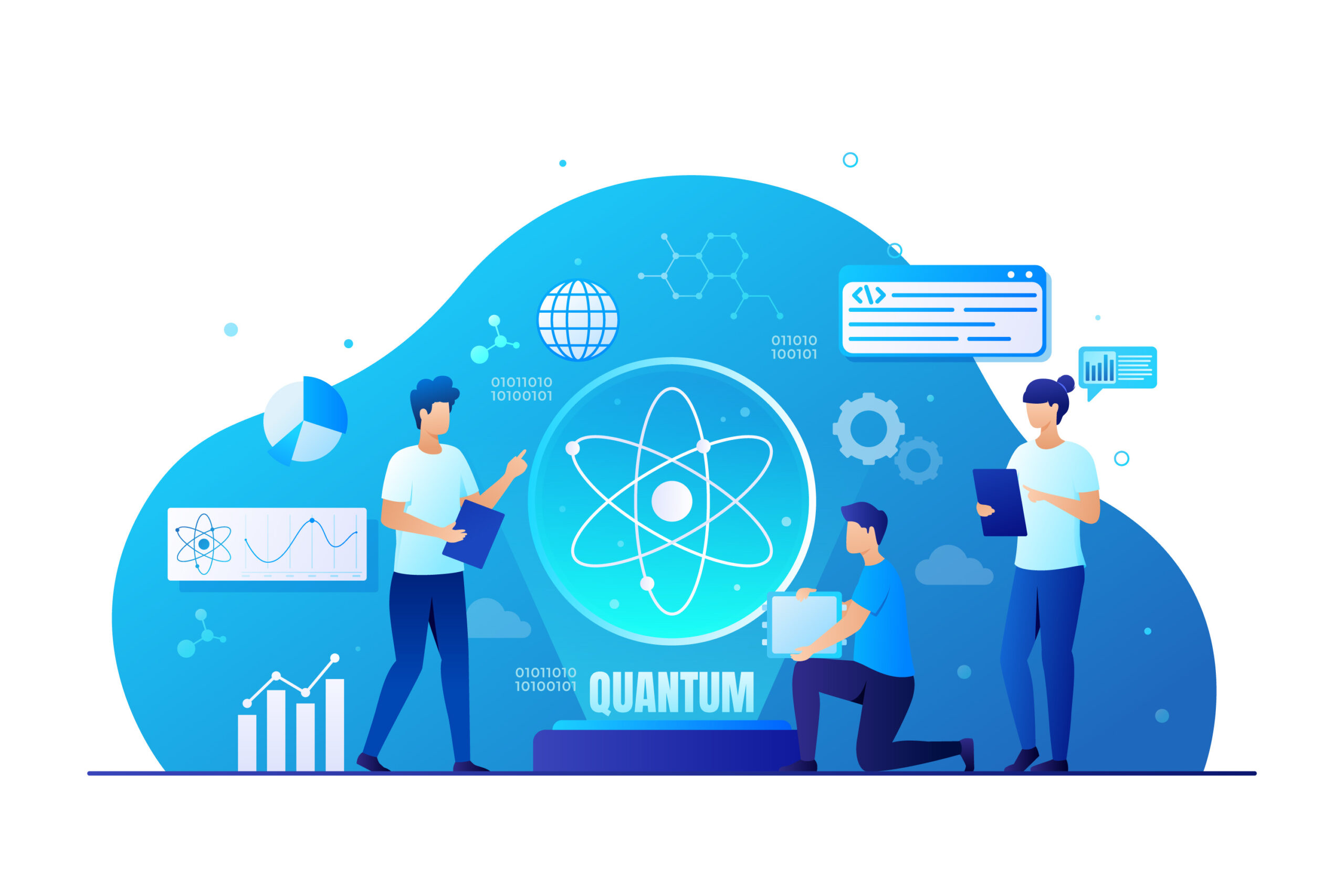
Quantum computing is an exciting new technology that has the potential of quantum technology to revolutionise the way we think about computing. Quantum computation is based on the principles of quantum mechanics, which is a branch of physics that studies the behaviour of matter and energy at the atomic and subatomic level. Unlike classical computers, which use binary digits (bits) to represent information, quantum computers use quantum bits, or qubits. In this blog post, we will explore what quantum computation is and how it differs from classical computing. We will also discuss the potential benefits that quantum computation could bring to various industries.

One of the most significant potential benefits of quantum information processing is its ability to solve problems that are currently intractable for classical computers. For example, quantum computers could be used to crack encryption codes, simulate chemical reactions, and optimize complex systems. Additionally, quantum cryptography could be used to improve machine learning and artificial intelligence. It can help process large amounts of data more quickly and efficiently.
In the field of medicine, quantum programming could be used to simulate the behaviour of proteins and drug interactions. It could also be applied in drug discovery to accelerate the process of identifying new and effective drugs.
In finance, quantum computing could be used to optimize financial portfolios and simulate global financial markets.
In the field of logistics, quantum technology could be used to optimize transportation routes. In telecommunications, it could improve the efficiency of communication networks.
Another potential use case for the potential of quantum algorithms is in the field of cryptography. Quantum computers have the ability to perform certain types of mathematical operations that are currently infeasible for classical computers. One example is factoring large numbers, which is the basis for many encryption algorithms. This means that quantum computers could potentially break encryption codes that are currently considered secure. Therefore, it is important to develop new quantum-resistant encryption methods.
Lastly, quantum computation could also be used to improve the performance of machine learning and artificial intelligence. By using quantum programming, it is possible to process large amounts of data more quickly and efficiently. This could lead to the development of more advanced AI systems.
The potential of quantum computing is still in the early stages of development, but it has the potential to change the way we live and work. While there are still many challenges to overcome before quantum computers can be used in practical applications, researchers and scientists are working hard. They aim to unlock the full potential of this powerful new technology.